
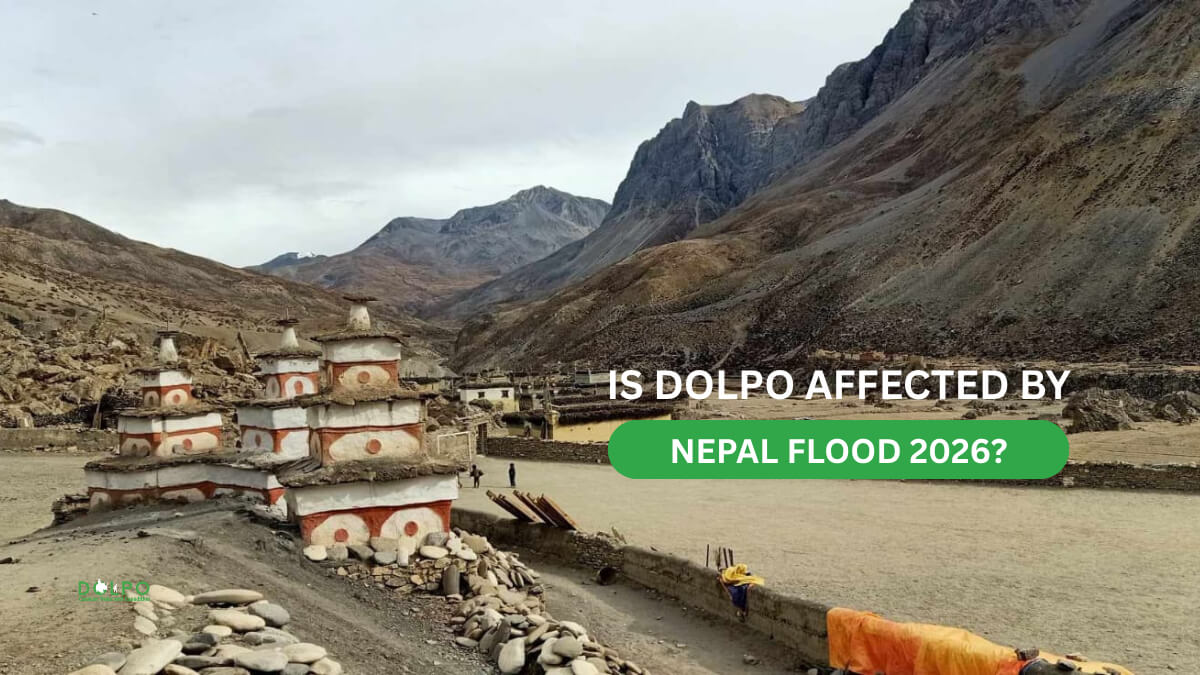
Can You Travel to Dolpo After Flash Flood?
If you've seen the recent flood news out of Nepal and you have a Dolpo trek booked, or you're thinking about booking one, you're probably asking yourself one thing: Is Dolpo affected by the Rasuwa Flash Flood in Nepal?
International coverage tends to describe disasters like this as a "Nepal flood," which can make it sound like the whole country is affected. In reality, Nepal's trekking regions sit in different valleys, use different river systems, and are reached through entirely different roads and airports.
This article gets straight to the point. It explains where the current disaster actually occurred, whether Dolpo has been affected, how you'd reach Dolpo right now, and what to check before you finalize your plans.
Quick Answer
♦ Dolpo has not been identified as part of the current Rasuwa flood disaster area, based on available reporting.
♦ The disaster is concentrated around the Rasuwa/Nepal-Tibet border corridor and its downstream areas.
♦ Dolpo is in a separate western Himalayan region with its own access corridor.
♦ Most Dolpo itineraries travel through the Kathmandu-Nepalgunj-Juphal gateway.
♦ Travelers should still verify flights, weather, and trail conditions before departure.
What Happened in Nepal's 2026 Flash Flood?
The Nepal 2026 flash flood was mainly concentrated in Rasuwa and the Bhote Koshi-Trishuli river corridors, causing severe loss of life and infrastructure damage. Its effects also disrupted transport in other parts of Nepal.
Here’s what happened:
♦ The 2026 Bhote Koshi / Trishuli Flash Flood struck Nepal's Rasuwa district and surrounding areas on August 26, 2026, after a massive glacier collapse on Langtang Lirung near the Nepal-Tibet border triggered a magnitude 5.2 seismic event.
♦ A sudden surge of ice, mud, and debris swept through the Lhende Khola into the Bhote Koshi and Trishuli River corridors, devastating Rasuwagadhi border post and the settlements of Timure and Syabrubesi.
♦ As of August 31, at least 903 people have died in Nepal and 16 in Tibet, while 4,247 people remain missing in Nepal and 546 in Tibet, including many hydropower workers trapped in the Trishuli 3A and 3B tunnels.
♦ The debris flow continued through Nuwakot, Dhading, Gorkha, Tanahun, and Chitwan, damaging more than 45 km of transport corridors, washing away bridges, and damaging or destroying 27 hydropower facilities.
♦ Debris and bodies were carried far downstream, with some recovered as far as Chitwan and neighboring India. China has provided $2.2 million in aid, while Nepal's military has deployed 15 helicopters and more than 12,000 personnel for rescue operations.
♦ The disaster remains heavily localized within the affected river valleys. Major trekking regions such as Annapurna and Everest are physically unaffected by the flood, although travelers across Nepal may still face transport disruptions because of damaged highways.
Is Dolpo Affected by the Nepal Flood?
No, the major August 2026 floods in Nepal have not affected Dolpo trek area. Dolpo lies in western Nepal, outside the reported Rasuwa flood corridor, and is accessed through a separate transport network.
| Question | Current Situation |
| Is Dolpo part of the reported Rasuwa flood zone? | No |
| Has Dolpo been identified as a flood disaster area? | No |
| Does this mean Dolpo has zero travel risk? | No |
| Should travelers still check current conditions? | Yes |
The current Rasuwa flood shouldn't be treated as a reason to write off Dolpo trekking altogether. That said, this isn't a guarantee that every Dolpo flight or trail will run exactly as planned. Nepal is still in monsoon season, and mountain conditions can shift on their own timeline, flood or no flood.
Planning an Upper Dolpo adventure? Explore the Upper Dolpo Trek itinerary to see the route, logistics and trip details before choosing a departure date.
Can You Still Travel to Dolpo? Here's How to Reach It
Travel to Dolpo can still be planned, as long as your specific flights, weather, and trail conditions are cooperating at the time you go.
Most Dolpo itineraries follow the same basic route:
♦ Travel to Kathmandu.
♦ Fly from Kathmandu to Nepalgunj, a lowland city in western Nepal.
♦ Fly from Nepalgunj to Juphal, the small mountain airstrip serving Dunai, the Dolpa district headquarters.
♦ Continue by trek toward your chosen route Upper Dolpo, Lower Dolpo, Phoksundo, or Mugu Dolpo.
This route has no overlap with the Rasuwa Syabrubesi corridor, so the road damage reported there doesn't directly block your way to Dolpo. The real variable is weather, not the flood. Juphal is a small mountain airstrip, and flights there are genuinely weather dependent in any season, can be delayed because of weather and operating conditions. If you're planning around flight schedules and changing mountain conditions, our Dolpo trekking guide provides additional background on travelling through the region.
For instance, a traveler planning a Phoksundo focused trek would typically travel through Nepalgunj and Juphal before beginning the trek, rather than passing through the Rasuwa corridor. Many Dolpo itineraries use this western Nepal gateway, although the exact access and return logistics vary by route. Travelers planning this type of itinerary can learn more about the Phoksundo Tea House Trek and what to expect from the route.
What Should You Check Before Your Dolpo Trek?
Even though Dolpo hasn't been identified as part of the current disaster, it's still worth confirming your exact conditions shortly before departure.
♦ Check the latest disaster update for any newly reported changes.
♦ Check the weather forecast for your travel window.
♦ Confirm your Kathmandu-Nepalgunj flight status.
♦ Confirm your Nepalgunj-Juphal flight status.
♦ Check trail conditions for your specific trekking route.
♦ Confirm your current permit requirements with your trekking agency.
♦ Review your travel insurance, including evacuation coverage.
♦ Keep buffer days in your schedule for weather delays.
♦ Ask your trekking operator for a route specific update rather than relying on general reassurance.
Route-specific information will always tell you more than a general "Nepal flood" headline. Dolpo is a government restricted trekking area, so permits have to be arranged through a registered agency regardless of the current flood situation Upper Dolpo and Lower Dolpo each require their own restricted area permit, and Upper Dolpo also carries a Shey Phoksundo National Park entry permit on top of that.
Nepal's Department of Immigration is the official body that issues these permits, and it's worth checking current fees and requirements before you commit to dates, since they're periodically revised. You can also review our guide on how to obtain a Nepal trekking permit for a practical overview of the permit process.
Remote area logistics are also worth thinking through separately from the flood question. Facilities in Dolpo are limited compared to more developed regions like Everest or Annapurna, communication can be patchy on the more remote stretches, and accommodation varies noticeably by route. For more detail on what this looks like on the ground, our guides to accommodation in Dolpo and facilities on a Dolpo trek are useful starting points.
Which Dolpo Trek Is Right for You in 2026?
The right Dolpo trek depends more on your available time, trekking experience and altitude tolerance than on the current flood situation.
| Trek | Best For | Main Experience |
| Phoksundo-focused trek | Travelers wanting a focused Dolpo experience | Shey Phoksundo Lake and Himalayan landscapes |
| Lower Dolpo | Travelers seeking a classic Dolpo experience with access to Phoksundo and remote landscapes | Remote landscapes and cultural experience |
| Upper Dolpo | Experienced trekkers | High passes, remote valleys and Tibetan Buddhist culture |
| Mugu Dolpo | Experienced adventure travelers | Extended remote Himalayan experience |
If a shorter, culture-focused trip suits you better, the Lower Dolpo Trek is a great way to experience the region without committing to a longer expedition. For travelers looking to venture deeper into remote Himalayan landscapes, the Mugu Dolpo Trek offers a more off the beaten path experience.
Planning Your Dolpo Trek With Local Route Knowledge
When conditions across Nepal are shifting, route specific advice from an operator that actually knows Dolpo matters more than general news coverage.
Dolpo Caravan Treks is a locally owned trekking company focused specifically on this region, running routes across Upper Dolpo, Lower Dolpo, Phoksundo, and Mugu Dolpo. That kind of local grounding is most useful exactly in situations like this one, where you need someone who can confirm what's actually happening on a specific flight sector or trail rather than a general national headline.
Recommended Read: Nepal Wellness Tourism Dolpo
Final Thoughts
The current Rasuwa flash flood is a serious disaster, but Dolpo has not been identified as part of that reported disaster area. That doesn't mean Dolpo trekking is automatically closed, it means your decision should come down to your own route, flights, weather and trail conditions rather than a broad "Nepal flood" headline. Conditions can still change, so verify things shortly before you travel rather than relying on information from weeks ago.
If you have a Dolpo departure date in mind, contact Dolpo Caravan Treks for the latest route specific information and help planning your itinerary.
Frequently Asked Questions
Could the flood affect Dolpo travel indirectly?
Yes. Even though Dolpo is outside the Rasuwa flood zone, damaged highways and wider transport disruptions elsewhere in Nepal could affect your journey to or from Kathmandu.
Should I add extra days to my Dolpo itinerary?
Yes. Adding one or two buffer days is sensible because mountain flights and remote region travel can be delayed by weather or operating conditions.
What should I confirm before booking a Dolpo trek?
Confirm your flight schedule, trekking route, trail conditions, permits, weather forecast, and the latest local update before finalizing your departure.
Can weather still disrupt a Dolpo trek during this period?
Yes. Dolpo travel can be affected by rain, poor visibility, flight delays, and changing mountain conditions even when there is no direct flood impact.
Does the Rasuwa flood mean all Nepal trekking is unsafe?
No. The flood is geographically concentrated, so conditions need to be assessed by region rather than treating the entire country as one affected area.
Who should I contact for the latest Dolpo conditions?
Your trekking operator is one of the best sources for route-specific updates because they can check current flight, trail, and local conditions before your departure.
Should I cancel my Dolpo trek because of the Nepal flood?
No, you do not need to cancel your Dolpo trek because the recent flooding in Nepal is localized to the Trishuli and Bhote Koshi river corridors in the Rasuwa and Nuwakot districts.

Leave Your Comment